
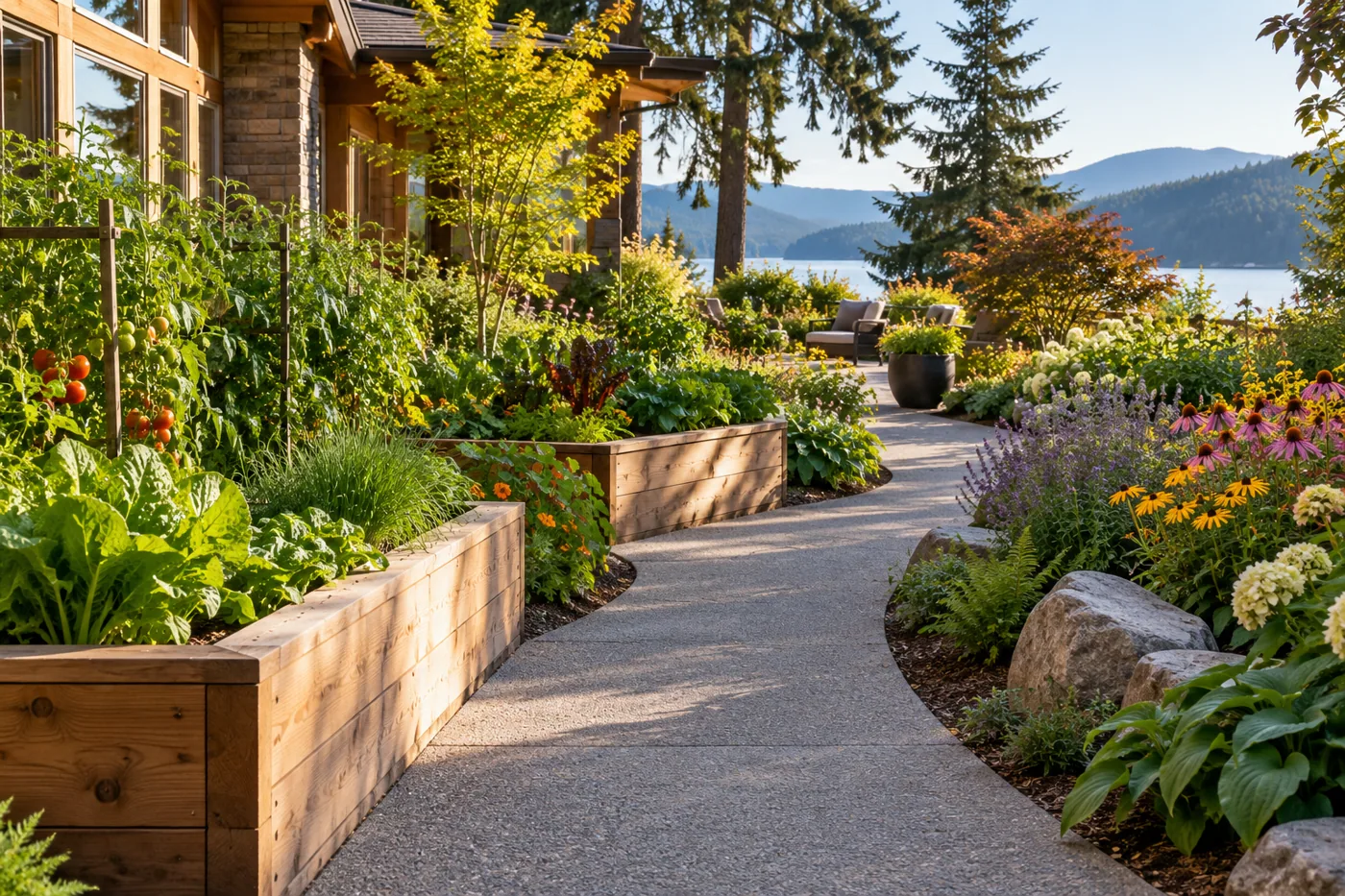
Paths, destinations and surfaces for more time outside.
Pick destinations before materials
Choose the places a person wants to reach: a table, planted bed, viewpoint, gate or patio. Draw a continuous loop or route between those places and the house. An attractive path to nowhere is of little use.
Test the surface in real weather
Loose gravel, shifting pavers and soft ground may be tiring or difficult for wheels and walking aids. A firm surface and drainage plan matter through rain, frost and seasonal changes.
Leave space to stop and turn
A route needs more than width in a straight line. Think about meeting another person, turning near raised beds and approaching seating without reversing a long distance.
Make garden tasks reachable
Beds, hose controls, gates and tools should fit the person and mobility device. A raised bed height should come from a comfortable test, not a generic dimension.
Questions about this topic
Can loose gravel be used?
Loose material may be difficult for many mobility devices; ask about stable alternatives.
Must the whole yard be level?
No. The priority is a usable route to the destinations that matter.
Will a raised bed work for a wheelchair?
It can if its reach, edge and approach suit the user.
How does drainage affect the path?
Pooling and frost can make a smooth route difficult; drainage should be planned with the surface.
Where should seating go?
Place it where it can be approached and used without blocking the path.