
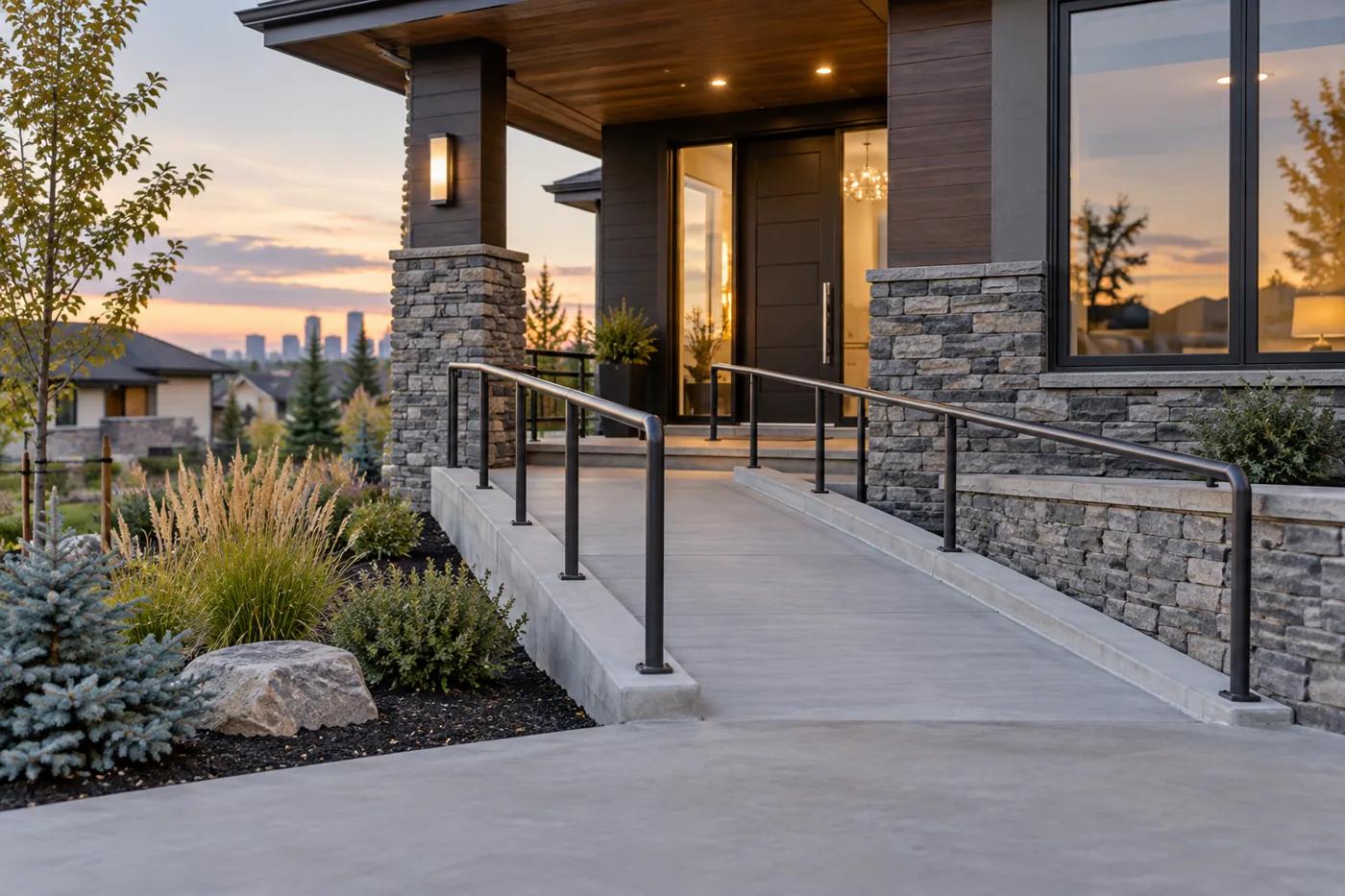
Compare space, rise and everyday use before choosing.
Start with rise and available run
A short run cannot safely solve a tall rise just by making a ramp steeper. Assess the height, route length, room for level landings, turns and access to the door. A site drawing is more reliable than choosing a product from a catalogue first.
Compare daily use and maintenance
A ramp is a continuous path without mechanical equipment, but may use considerable yard space and needs snow and ice management. A platform lift can fit a different footprint, yet requires power and a maintenance plan. Neither answer is universal.
Consider the whole arrival route
Where does a vehicle stop? Can the user get onto the approach? Is there room to open the door at the top? A device that addresses the steps but leaves a difficult walkway or threshold does not complete the route.
What to bring to an assessment
Share photos from the side and front, approximate step rise, property boundaries and the type and size of mobility device. Ask about access in winter, how a visitor enters and how the system is used when power or equipment is unavailable.
Questions about this topic
Is a ramp always cheaper?
Costs depend on rise, length, materials and site work; no comparison is reliable without the property details.
Can a lift go outdoors?
Some units are designed for outdoor use, subject to site fit and product specifications.
Do ramps need level landings?
Landing and approach needs are part of safe planning and should be reviewed under applicable requirements.
What happens during a power outage?
Ask about the specific lift’s backup and manual operation before selecting it.
Can either option be temporary?
Some ramp systems can be temporary or modular; suitability depends on the property and use.