
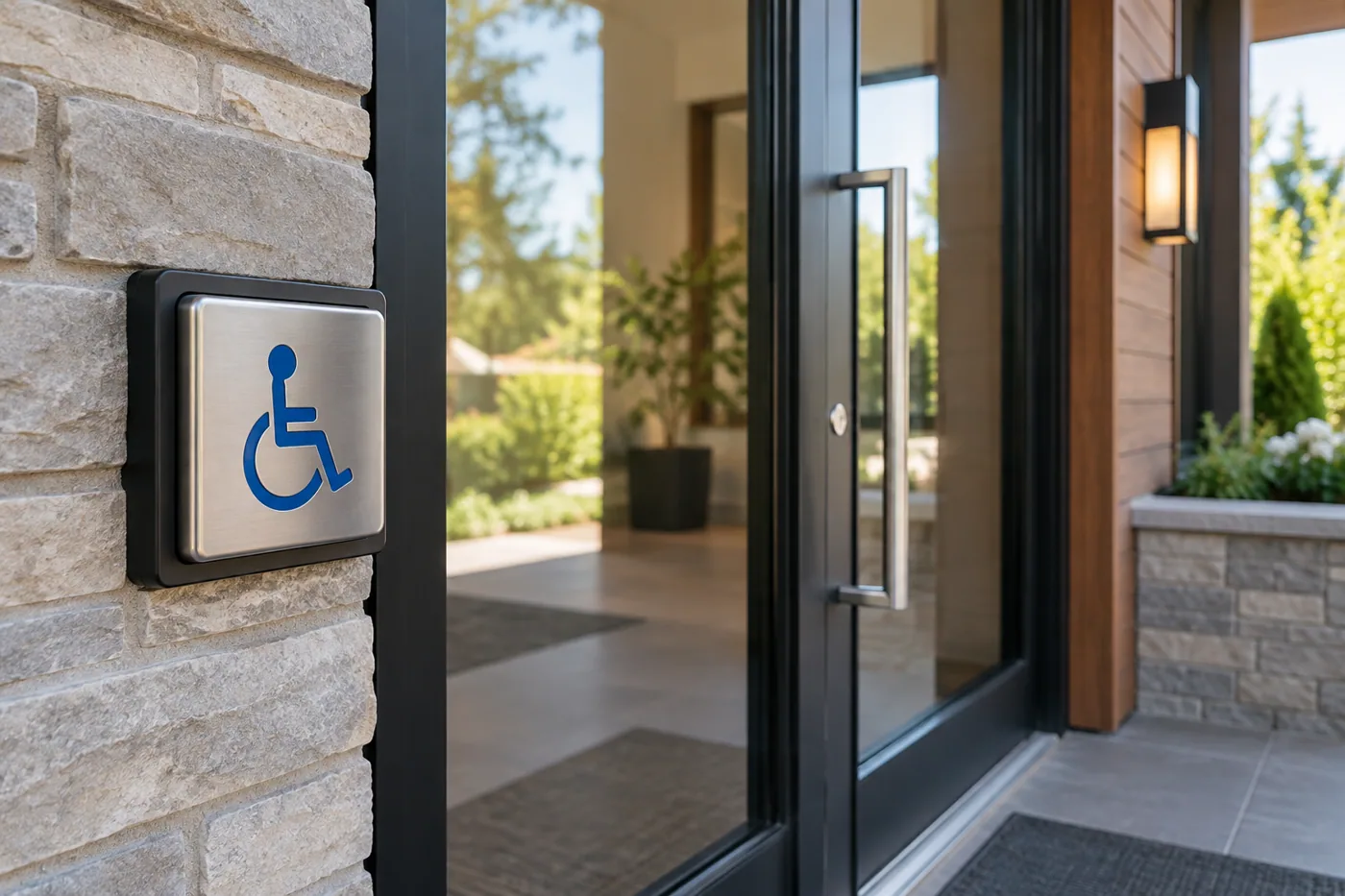
How to think about operators, controls and safety.
Separate unlocking from opening
A smart lock can release a latch, but does not move the door. Opening requires a door operator selected for the door and environment. The lock, closer, operator and controls need to work as a system.
Choose more than one way to operate it
Voice can help when reaching a button is hard, but a wall control, remote or other accessible input may still be needed. Consider internet or power outages, visitors and caregivers without assuming everyone uses the same technology.
Review the doorway itself
Check clear opening, threshold, door swing, approach space, weather exposure and obstruction detection. Making a door move automatically cannot fix a route that is too narrow or has an impassable step.
Ask the safety questions before purchase
Which products are compatible? What happens if the power fails? Can someone open the door manually? How is unintended activation prevented? Have a qualified installer evaluate these issues for the specific opening.
Questions about this topic
Can Alexa operate every automatic door?
No. Compatibility depends on the chosen operator, controller and integration.
Is a smart lock enough?
No. It can unlock but does not physically open the door.
Should there be a manual option?
Yes, manual or alternative operation should be considered in the design.
Can an exterior door be automated?
Possibly, subject to door construction, weather and safe operation.
Can the patio threshold remain raised?
Automation does not remove a threshold barrier; the transition needs separate assessment.